
Managing a residential rental property portfolio in London involves navigating a complex, ever-shifting web of safety regulations, licensing requirements, and legal responsibilities. Among these duties, maintaining the structural, functional, and operational integrity of your property’s electrical infrastructure stands paramount. Securing a valid EICR certificate is not merely an administrative box-checking exercise designed to satisfy local borough councils; it is a critical safeguard for your tenants’ lives and a fundamental legal shield for your high-value real estate investments.
As a property owner operating in one of the most heavily regulated rental markets in the world, understanding the structural nuances of a comprehensive eicr test—and your ongoing legal obligations regarding an electrical safety certificate—is vital. Failing to keep up with these standards can save you from catastrophic equipment failures, protect you against severe financial penalties, and, most importantly, prevent life-threatening electrical hazards. Below, we provide an exhaustive, expert breakdown of everything you need to know to navigate electrical compliance smoothly across Greater London.
The Legal Mandate for London Landlords
The regulatory landscape for private landlords shifted permanently with the enforcement of the Electrical Safety Standards in the Private Rented Sector Regulations. Under these rules, landlords in England are legally obligated to ensure that all electrical installations within their rented properties are inspected, tested, and verified by a qualified, competent professional at least every five years. The final, detailed output of this thorough engineering assessment is the Electrical Installation Condition Report, which is universally referred to in the industry as an EICR certificate.
This strict regulation applies globally to all specified tenancies across London’s diverse housing stock. Whether you manage a compact studio apartment in Shoreditch, a premium corporate let in Chelsea, or a multi-story House in Multiple Occupation (HMO) in Croydon, your obligations remain identical.
Local authorities across London’s 32 boroughs have grown increasingly stringent regarding enforcement. Failing to provide a valid, passing electrical safety certificate to your tenants within 28 days of the inspection—or directly to local councils upon request within 7 days—carries severe legal ramifications. Local councils possess the statutory power to levy civil penalties of up to £30,000 per violation, and repeated negligence can lead to Banning Orders, making it impossible to legally operate as a landlord.
What Exactly Happens During an EICR Test?
An eicr test is an in-depth, rigorous diagnostic assessment of your property’s fixed electrical infrastructure. It is important to distinguish this from Portable Appliance Testing (PAT), which merely checks plug-in appliances like kettles and microwaves. Instead, an installation test evaluates the invisible backbone of the building’s electrical system.
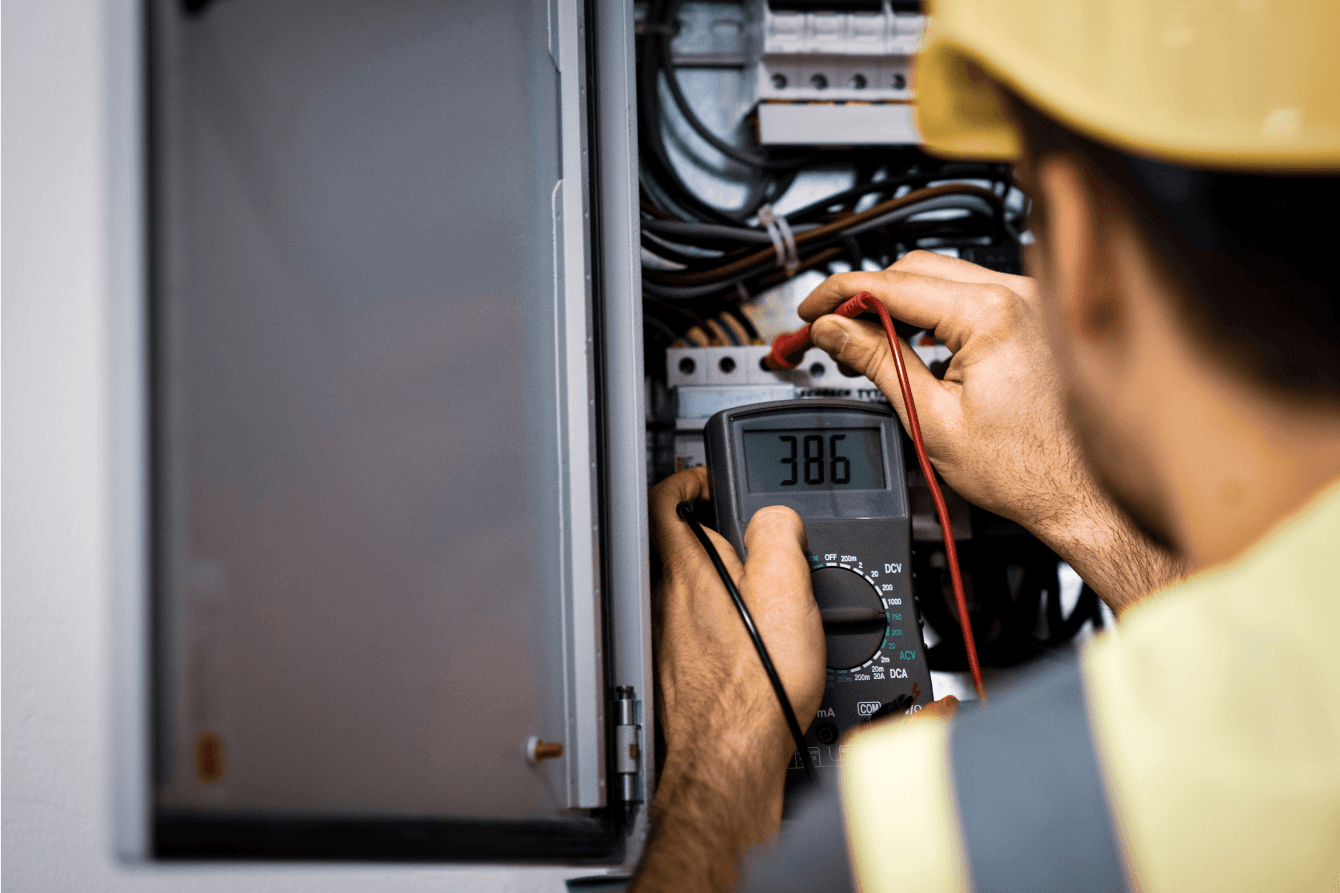
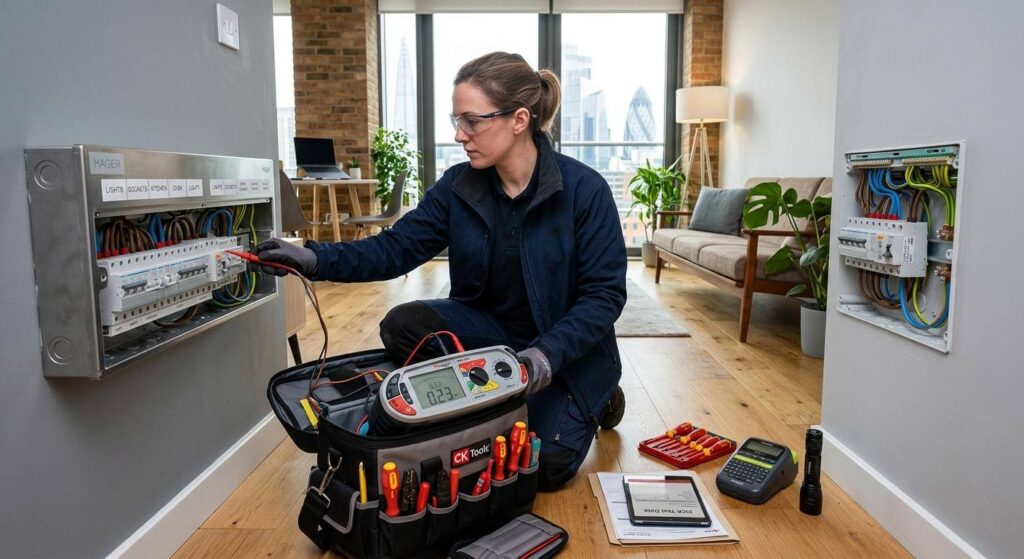
When a certified engineer arrives at your London property, they will execute a series of both visual inspections and dead/live electrical engineering tests. The focus centers entirely on the hardwired components of the property: the main fuse board (traditionally called the consumer unit), the internal wiring behind the walls, plug sockets, light switches, and fixed electrical equipment connections such as electric showers, immersion heaters, and integrated kitchen extractors.
The core objectives of executing this comprehensive diagnostic checklist include:
Revealing Hidden Hazards: Identifying any degradation in internal wiring that could cause electrical shock risks or spark structural fire hazards.
Spotting Substandard Work: Exposing defective electrical work, DIY installations, or unauthorized circuit modifications carried out by previous tenants or unaccredited handymen.
Checking Safety Buffers: Confirming the presence and efficiency of fundamental safety buffers, including adequate earthing and protective bonding across the system.
Assessing Load Distribution: Pinpointing overloaded electrical circuits that run the risk of overheating and causing systemic power failures.

Decoding the Assessment Classifications
Upon the conclusion of the inspection, the engineer will compile their findings into the formal documentation. Your final EICR certificate will explicitly classify the overall condition of your property’s electrical installation as either “Satisfactory” or “Unsatisfactory.”
If defects, wear, or deviations from the latest British Standard (BS 7671) are uncovered, they will be explicitly tagged with standardized industry action codes. Understanding these codes is essential for planning your next steps:
Code C1: Danger Present
This indicates an immediate risk to life. An example would be an exposed, live electrical wire or a severely melted main switch. The engineer is obligated to make the site safe before leaving, and immediate remedial action must be taken to eliminate the threat.
Code C2: Potentially Dangerous
This signifies a critical defect that, while not actively dangerous at the exact second of testing, could easily escalate into a severe hazard given a minor system change or spike in usage. An unearned metal light switch or an overloaded circuit breaker fall into this bracket. Urgent remedial action is mandatory.
Code C3: Improvement Recommended
This classification means that a component does not match the most modern electrical safety standards, but it is not inherently dangerous. For instance, a functioning fuse box that lacks modern RCD protection might receive a C3. You are not legally required to upgrade C3 items to achieve compliance, though it is highly recommended for future-proofing your property.
Code FI: Further Investigation Required
This code implies that the inspector found an anomaly within the system that could not be fully verified without causing property damage or requiring specialized tools outside the standard scope of the test.
Critical Compliance Note: If your report returns even a single C1, C2, or FI code, the document will officially state an “Unsatisfactory” outcome. This means you do not hold a legally compliant electrical safety certificate, and you must legally instruct a qualified professional to complete the necessary remedial works within 28 days of the original test date.
The Business and Practical Benefits of Regular Testing
While avoiding hefty council fines is a significant motivator, approaching an eicr test as a proactive asset management tool yields measurable financial advantages for property owners.
| Feature / Benefit | Proactive Testing | Neglected Testing |
| Emergency Call-Out Costs | Extremely Low (Problems caught early) | Very High (Catastrophic failure at night/weekends) |
| Insurance Claim Success | Fully Supported with Documentation | High Risk of Immediate Claim Rejection |
| Tenant Retention Rate | High (Property feels safe and managed) | Low (Frequent electrical faults cause friction) |
| Asset Lifetime | Extended via targeted minor repairs | Reduced due to total system overhauls |
Regular diagnostics drastically reduce the likelihood of dealing with disruptive, expensive emergency electrical call-outs. By identifying degrading components or outdated consumer units during a planned inspection, you can schedule minor updates during tenant changeovers, rather than facing catastrophic power failures during a harsh winter freeze when emergency rates skyrocket.
Furthermore, possessing an active, clean electrical safety certificate directly protects your property insurance validity. In the unfortunate event of an accidental fire or major electrical surge, insurance underwriters will almost always demand proof of up-to-date testing before processing structural payouts. Operating without a valid EICR certificate grants insurers a legal path to deny your claim entirely, leaving you personally liable for rebuilding costs and lost rental income.
Choosing a Qualified Inspector in the London Market
London’s fast-paced property market features thousands of independent contractors, but high-stakes electrical diagnostics require certified specialists. Landlords cannot simply hire any general tradesperson; the law stipulates that the inspector must be a competent, fully qualified professional.
When vetting an electrical engineering company, you must verify that their inspectors hold valid registrations with national approved regulatory bodies, such as the NICEIC (National Inspection Council for Electrical Installation Contracting) or NAPIT (National Association of Professional Inspectors and Testers). Checking these credentials guarantees that the engineer possesses the necessary insurance, calibration tools, and up-to-date knowledge of the IET Wiring Regulations.
Our dedicated team of fully accredited, London-based electrical engineers specializes in delivering swift, highly accurate, and non-invasive residential assessments. We understand the value of your time and the importance of minimal disruption to your tenants. From the moment our engineer steps onto your property to the digital delivery of your compliance documents, we handle every step with precision, ensuring your portfolio remains secure and legally bulletproof. Contact us today to schedule your next inspection.
Related Services
You can read more about the Gas Boiler Service.